Can Insulation Be Reused?

If you’re thinking about updating the insulation in your home, you’re probably wondering what can be done about your existing insulation materials. Can they be reused, or will you need to settle for a complete replacement?

Most homeowners will be happy to learn that depending on the type of insulation material, they may be able to reuse their insulation. In this blog post, we’ll discuss two of the most eco-friendly insulation options — cellulose and fiberglass — and whether they can be reused or recycled for your project.

For a FREE Estimate On Your Project

Can You Reuse Blown-In Insulation?

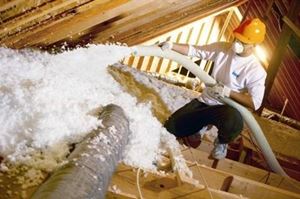
Technician wearing yellow hardhat, blowing loose-fill insulation into an attic.Blown-in insulation comes in cellulose and fiberglass options and is one of the most common types of insulation used in a home.

Both cellulose and fiberglass insulation can be reused or repurposed as long as the damage isn’t significant enough to render their R-value ineffective.

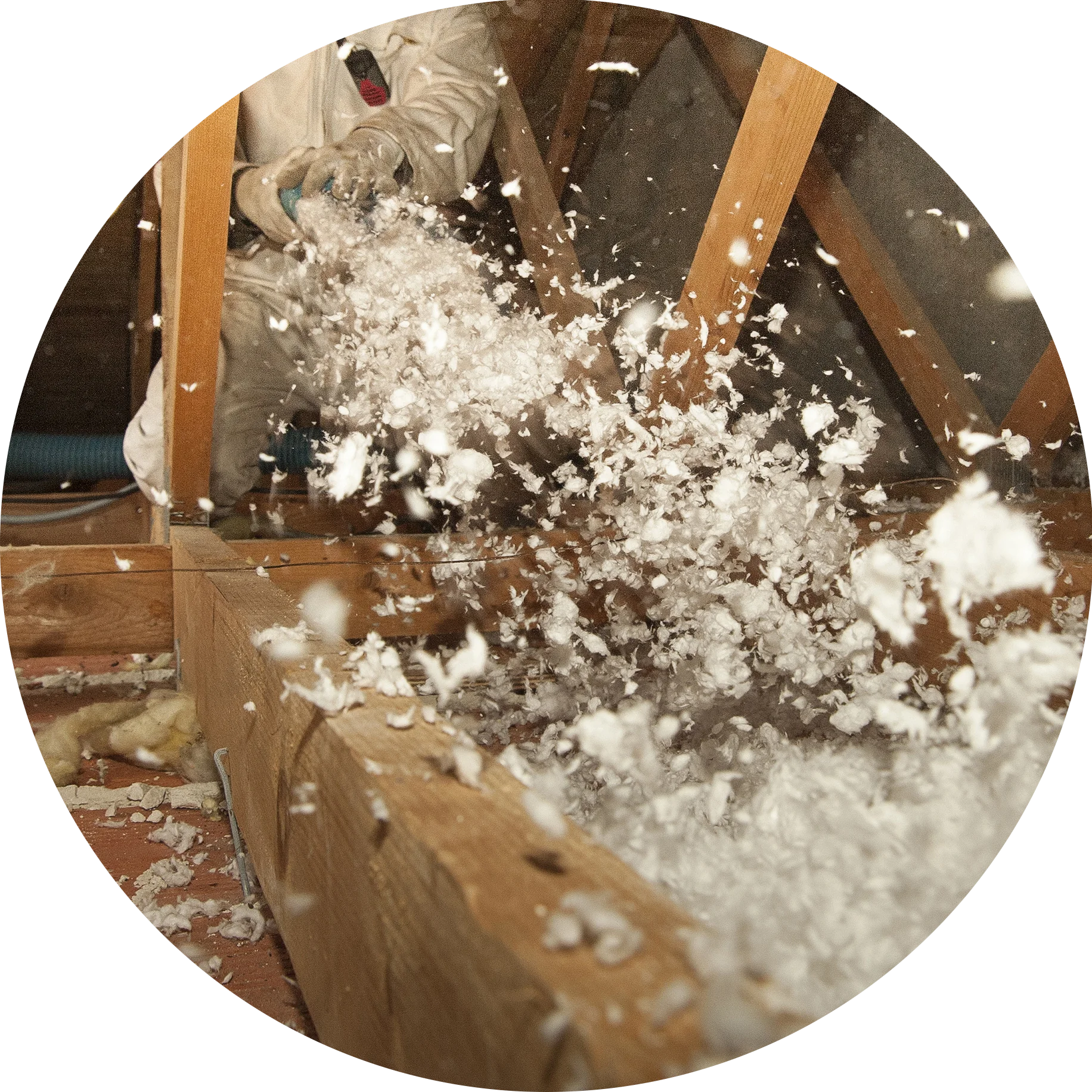
Insulation installation professionals can recover and reuse blown-in insulation on-site, ensuring no excess material goes to waste. Using specialized equipment, your insulation team can easily vacuum any extra material and blow it back into place or salvage it for future project needs.

Is Cellulose Insulation Recyclable?

Cellulose insulation can be reused and recycled, making it one of the most sustainable insulation materials available. Cellulose is comprised of approximately 80% recycled material that can then be recycled again for future use.

Cellulose is an eco-friendly insulation option for other reasons as well: Taking less energy to create than other materials, cellulose helps promote responsible forestry management by using consumer paper products to keep homes insulated.

Can Fiberglass Insulation be Recycled?

Fiberglass insulation is another recyclable insulative material. While it features less recycled content than cellulose, fiberglass insulation can still be reclaimed from demolition debris and recycled into a new product fit for use in your DC-area home.

Despite the fact that fiberglass insulation can be recycled, it does come with some additional challenges compared to cellulose. This is because fiberglass insulation usually contains materials aside from paper, such as aluminum and glass fibers.

Check with your local recycling facilities to see if they have any special regulations regarding the proper recycling procedures for fiberglass materials.

Choose the Right Insulation for Your California Home

If you’re looking for a sustainable insulation option for your home, cellulose and fiberglass insulation are both excellent choices. When weighing your options, keep in mind your budget, home size and ease of recycling as it relates to your local recycling facility’s guidelines.

Need help deciding which insulation material is right for your home? Broken Drum Insulation of Visalia can provide the expert guidance you need to make the most informed decision.

Our insulation installation experts will ensure your project is performed to the highest standards, working carefully to repurpose any existing insulation that can be salvaged, helping you save on your insulation replacement and installation needs.

Consult with our insulation experts about your options by calling 559-627-1032 today.
Is Spray Foam Insulation Worth the Cost?

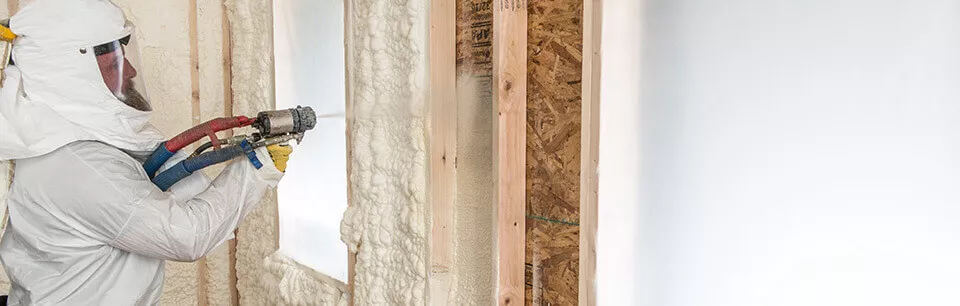
Insulation contractor uses spray foam insulation in framing of newly constructed home.

Spray foam insulation is a type of wet insulation that is directly sprayed into framing. On contact with the surface, the foam will rapidly expand to fill in the space. Quickly, the foam will harden and create a dependable barrier against thermal transfer, vapor, and air movement.

There are two types of spray foam:

  • Open cell: This spray foam insulation is less dense and cannot act as a vapor barrier.
  • Closed cell: It is denser, features a higher R-value and can act as a vapor barrier.

Want to speak to an insulation specialist to learn more? Contact BDI Visalia online today!

Why Spray Foam Insulation is a Good Investment

Spray foam insulation absolutely provides enough benefits to be a worthwhile investment. It’s abundantly clear that spray foam insulation offers many more advantages than traditional insulation, including:

Spray foam leaves no gaps – Unlike batts (which can sag) and blown-in (which can settle), spray foam fills a space completely and thoroughly. And once installed, it’s not going to move.

Spray foam lasts a lifetime – The average lifespan of spray foam insulation is 80 years or more, making the higher cost much more worthwhile if you plan on living in your current home long-term.

Spray foam is highly versatile – Spray foam is a problem solver. Within oddly constructed homes, sometimes there are spaces where batts or blown-in insulation is impractical. In these situations, spray foam insulation can go where fiberglass cannot!

When Spray Foam Insulation Is Worth the Cost

Spray foam insulation provides noticeable benefits. These benefits often make it a top-class pick—especially in crawl spaces and around HVAC ductwork. However, we want to stress that it is often, but not always, the best choice. Which insulation will meet your needs best is determined by a number of factors, including:

  • The size and type of your home
  • Where your home is located
  • What materials make up your home
  • How many windows you have in your home
  • The type of HVAC equipment you use
  • Your budget

This is why there is no “one size fits all” in terms of insulation. Spray foam is an excellent product, but only when it is used in the right application. In certain locations in your home, spray foam might be more than you need. It may be awesome around your ductwork, but overkill in your attic.

While the investment is often worth it with spray foam, it is imperative that you work with skilled and experienced insulation contractors that will take the time to understand your needs and discuss them with you. Have your insulation contractor explain to you where spray foam would be the best choice in your home.

Need help deciding what type of insulation you want to choose? Call BDI Visalia at 559-627-1032 or contact us online today!

Spray Foam Insulation Installation in Fresno, CA

If you can benefit from the full R-value of spray foam, and you enjoy higher comfort and energy-efficiency, there’s no question that spray foam is absolutely worth it. If you’re looking to learn more about spray foam insulation, or if you’re in need of skilled insulation contractors in the Fresno area, contact Broken Drum Insulation of Visalia online today!


Faced vs. Unfaced Insulation

Whether you need to re-insulate your home or need insulation for a commercial building, you’ve probably done some research, trying to determine which type of insulation would be the best. Although professionals can help with this, it’s helpful to have some information on the front end!

Perhaps you’ve seen the terms “faced” and “unfaced” and are wondering what they mean. Continue reading to learn more!

What Is the Difference Between Faced and Unfaced Insulation?

There are many types of insulation that are unfaced—such as spray foam and loose-fill fiberglass. Faced insulation has a vapor barrier, or a vapor retarder (the facing) that helps prevent moisture from moving from one space to another. The facing also helps protect the surface, hold the insulation together and fasten the material to building components. Foil and plastic facings on rigid polyisocyanurate foam panels can even help stabilize the R-value.

Facing can be any variety of material—common ones include:

  • Kraft paper
  • Foil kraft paper
  • Aluminum foil
  • Vinyl

When to Use Faced Insulation

  • In cathedral ceilings (foil-faced batts are often used in these types of ceilings for the permeability rating frequently required for use in ceilings without attics)
  • In spaces that require insulation with a fire rating (some facings provide flame resistance)
  • When downward heat flow needs to be prevented (radiant barriers, which have facing, are effective at doing this)

When to Use Unfaced Insulation

  • When adding new insulation over existing insulation
  • Depending on material, anytime a facing isn’t required (for instance, spray foam may be ideal for the walls and facing isn’t necessary)

Learn more on the U.S. Department of Energy online »

Insulation Contractors Serving Visalia, CA

The experts at Broken Drum Insulation of Visalia installs unfaced insulation (spray foam, cellulose, blown-in fiberglass, batt fiberglass and rockwool) as well as faced insulation. We use Thermax insulation board, which has a glass-fiber-reinforced, faced polyisocyanurate foam core for a variety of commercial projects.

Get in touch with us today to learn more about our services!

How Does Fiberglass Insulation Work?

Do you need to insulate your home? If you’ve talked to professionals, chances are you’ve heard of “fiberglass.” Fiberglass is one of the oldest insulation materials (it’s been used for centuries), and it’s still one of the most commonly installed types of insulation today. But many people don’t know how it works.

How exactly does fiberglass insulation work?

About Fiberglass

Fiberglass is a composite material made of a plastic matrix reinforced by tiny glass fibers. It is lightweight yet strong, and since glass isn’t a good conductor of heat, it’s a very effective insulation material. Fiberglass insulation stops conduction heat transfer—which is the transfer of heat through solid objects (such as the walls of your home).

Fiberglass traps heat when it’s moving to a colder area—from outside to inside your home in the summer and from inside the house to outside in the winter. It is available as loose-fill or batts and can be installed anywhere in your home, used for:

Fiberglass insulation can not only help you save on your energy bills, but it can also help make your home more comfortable all year long and improve the energy efficiency of your furnace and air conditioner.

Fiberglass Insulation from Broken Drum Insulation of Visalia

Our team uses insulation products from top manufacturers in the industry, including Johns Manville, Thermafiber and Therm-All.

If you need to insulate your home in the Visalia, California area, we can help. Contact Broken Drum Insulation of Visalia today to learn more about our fiberglass insulation installation services!

Polystyrene Insulation vs. Polyurethane

Trying to improve the comfort of your Visalia, California area home but also save money on heating and cooling? If so, you might be interested in the benefits of foam insulation. You have two main types to choose from: rigid foam (polystyrene) and spray foam (polyurethane).

These two materials sound similar, but they have their differences! Learn more about your options to help you make an informed decision.

Polystyrene Rigid Foam Insulation

Rigid foam is primarily installed in unfinished walls, roofs and foundations. The dense product provides a higher R-value than other types of insulation, allowing for excellent performance with very little thickness. Installing rigid foam reduces thermal bridging, raises the R-value of a wall or roof assembly, and greatly reduces air leaks.

There are two types of polystyrene rigid foam insulation:

  • Expanded polystyrene (EPS): With an R-value of 3.6 to 4.2 per inch, EPS is an effective way to insulate a home. It’s the less expensive option of the two and is most appropriate for above-grade applications.
  • Extruded polystyrene (XPS): An impressive rating of R-5 per inch combined with high compressive strength and water resistance makes XPS the perfect insulation for below-grade slabs and foundation walls.

Polyurethane Spray Foam Insulation

Spray foam is the best type of insulation for reducing air leaks. It foams in place, allowing you to fill every nook and cranny. This makes spray foam ideal for oddly shaped spaces and filling gaps around floor and wall penetrations. However, because spray foam must be mixed on site and applied while wearing special protective clothing, you must leave installation to the professionals.

There are two types of polyurethane spray foam insulation:

  • Open-cell polyurethane foam: Expect an R-rating of about 3.6 per inch. Open-cell foam is permeable to moisture but impermeable to air. This makes it ideal for insulating roof assemblies that need to dry inward.
  • Closed-cell polyurethane foam: At about R-6.5 per inch, closed-cell foam offers the best R-value per thickness of any insulation. It has a glue-like consistency, adding structural integrity to any wall or ceiling you apply it to. This option is pricier than open-cell foam, but because it provides better R-value per inch and also acts as a vapor retarder, it may be the better option for your situation.

Foam Insulation Contractors Serving Visalia, CA

Although polystyrene insulation (rigid foam) is often installed during new construction, there are sometimes exceptions for retrofit projects. For help choosing between polystyrene rigid foam and polyurethane spray foam, and then installing the insulation, contact Broken Drum Insulation of Visalia!